

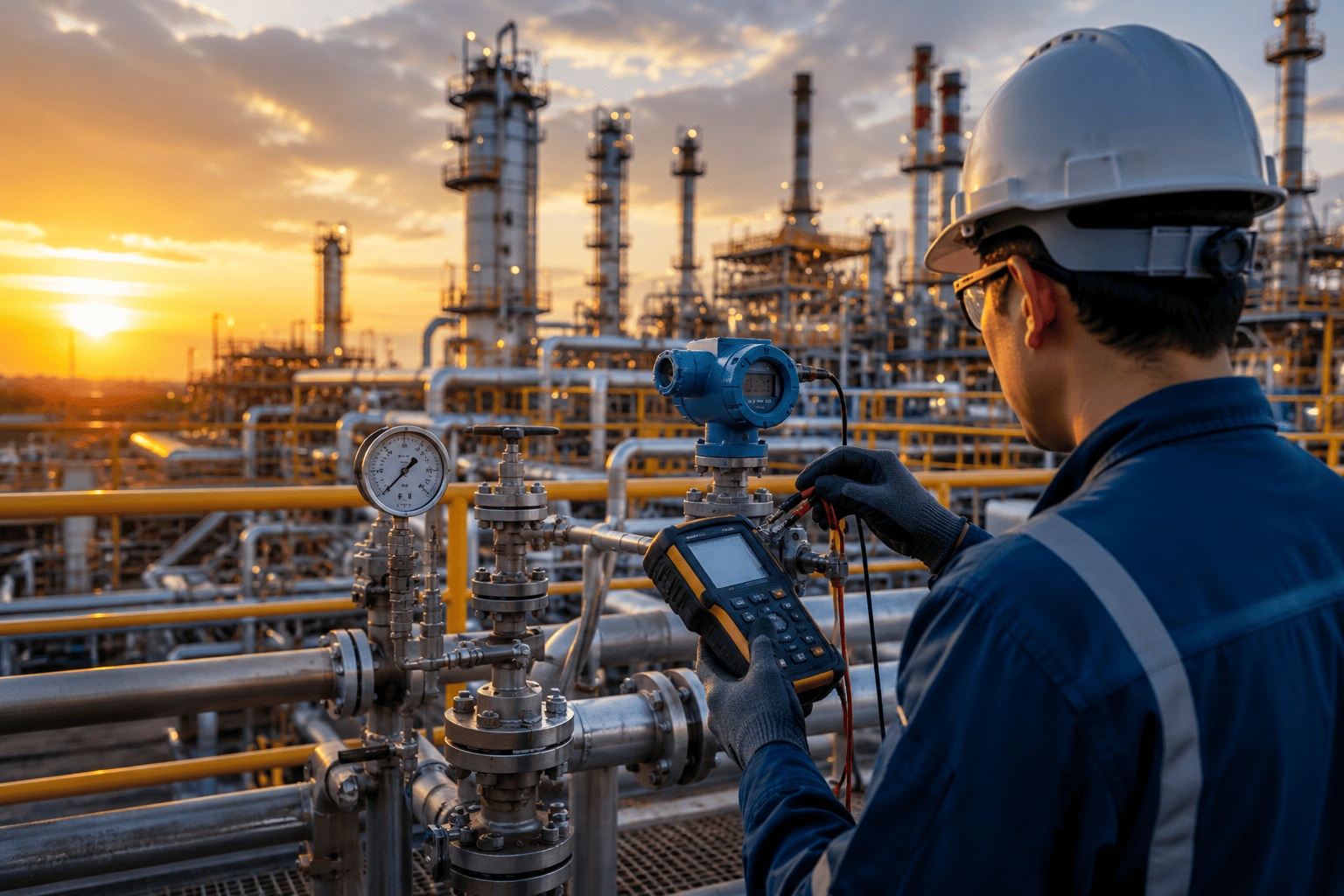
In the oil and gas industry, precision is not optional. Every process, measurement, reading, and operational decision depends heavily on accurate instrumentation. From pressure transmitters and flow meters to temperature sensors and control valves, instruments play a critical role in maintaining safety, efficiency, compliance, and production quality across facilities.
Yet despite its importance, instrument calibration is sometimes delayed, overlooked, or treated as a routine maintenance formality rather than a business-critical requirement. Many companies focus only on immediate operational continuity without realizing the long-term risks that inaccurate instruments can create.
The reality is that skipping calibration does not save money, but it usually creates hidden operational costs that become far more expensive over time.
In oil and gas operations, even small measurement inaccuracies can affect:
- Production quality
- Equipment performance
- Energy efficiency
- Safety systems
- Environmental compliance
- Operational reliability
What initially appears to be a minor calibration delay can eventually lead to shutdowns, product loss, equipment failure, regulatory penalties, or serious safety incidents.
This guide explains why instrument calibration is essential in oil and gas operations, the hidden costs of neglecting it, and how professional calibration services help maintain safe and efficient industrial performance.
Why Instrument Calibration Matters in Oil & Gas
Oil and gas facilities operate in highly sensitive environments where precision directly affects operational safety and process reliability.
Industrial instruments are responsible for monitoring:
- Pressure
- Temperature
- Flow rates
- Gas levels
- Tank measurements
- Process control systems
- Safety shutdown mechanisms
Over time, instruments naturally drift from their original accuracy due to:
- Continuous usage
- Harsh operating conditions
- Temperature fluctuations
- Vibration
- Moisture exposure
- Mechanical wear
Calibration ensures these instruments continue providing reliable and accurate readings.
Without proper calibration, operators may unknowingly make decisions based on incorrect data.
Small Errors Can Create Large Operational Problems
One of the biggest misconceptions in industrial operations is assuming that minor measurement errors are harmless.
In reality, even slight inaccuracies can compound across large-scale processes.
For example:
- A pressure transmitter reading slightly lower than the actual pressure may compromise safety margins
- Incorrect temperature readings can affect refining quality
- Flow meter inaccuracies may create product losses over time
- Tank level miscalculations can lead to inventory discrepancies
In oil and gas environments where operations run continuously, these small errors quickly translate into major financial losses.
Safety Risks Increase Without Proper Calibration
Safety is one of the most critical reasons calibration cannot be ignored.
Oil and gas facilities operate with:
- High-pressure systems
- Flammable materials
- Hazardous gases
- Extreme temperatures
Instrumentation helps monitor these conditions continuously.
If instruments fail to provide accurate readings, safety systems may not respond correctly during abnormal situations.
This can increase the risk of:
- Pressure failures
- Gas leaks
- Equipment damage
- Fire hazards
- Emergency shutdowns
Calibration helps ensure safety-critical instruments function within required tolerances at all times.
Inaccurate Readings Affect Production Quality
Process consistency is essential in oil and gas operations.
Poor calibration can create:
- Inconsistent product quality
- Refining inefficiencies
- Incorrect blending ratios
- Unstable process conditions
This not only affects operational efficiency but may also impact customer requirements and product standards.
For companies operating in competitive industrial markets, maintaining reliable process accuracy is essential for long-term operational performance.
The Financial Cost of Downtime Is Much Higher Than Calibration
Some businesses postpone calibration to avoid temporary interruptions or maintenance expenses.
However, unexpected equipment failure is usually far more expensive than preventive calibration.
Unplanned downtime can result in:
- Production delays
- Operational shutdowns
- Lost revenue
- Emergency repairs
- Over time, labour costs
- Delayed deliveries
A single instrument failure in a critical process can affect entire production systems.
Preventive calibration helps identify issues early before they escalate into larger operational disruptions.
Regulatory Compliance Depends on Accurate Instrumentation
Oil and gas industries operate under strict regulatory and safety requirements.
Many standards require:
- Documented calibration records
- Traceable measurement accuracy
- Scheduled instrument verification
- Compliance reporting
Failure to maintain calibration records may lead to:
- Audit failures
- Compliance penalties
- Certification issues
- Increased liability risks
Professional calibration services help organizations maintain accurate documentation and compliance readiness.
Harsh Industrial Environments Accelerate Instrument Drift
Oil and gas facilities expose instruments to extremely demanding conditions.
Common environmental stress factors include:
- Heat
- Corrosion
- Humidity
- Vibration
- Chemical exposure
- Dust and contaminants
These conditions accelerate calibration drift over time.
Even high-quality instruments require regular verification to ensure long-term reliability in such environments.
Calibration frequency should always reflect actual operating conditions rather than relying only on fixed schedules.
Energy Efficiency Also Depends on Calibration Accuracy
Energy usage is a major operational cost in industrial facilities.
Improperly calibrated instruments may cause:
- Excess energy consumption
- Inefficient process control
- Incorrect flow regulation
- Poor combustion efficiency
Small inefficiencies across multiple systems can significantly increase operational expenses over time.
Accurate calibration supports better process optimization and improved energy management.
Environmental Risks Increase With Poor Calibration
Environmental compliance is becoming increasingly important across industrial sectors.
Incorrect instrument readings may contribute to:
- Emission control failures
- Leakage monitoring issues
- Process instability
- Environmental reporting inaccuracies
In oil and gas operations, environmental incidents can result in:
- Financial penalties
- Operational restrictions
- Reputational damage
Reliable instrumentation helps organizations maintain environmental responsibility and operational accountability.
Calibration Extends Equipment Lifespan
Industrial equipment performs more efficiently when systems operate within correct parameters.
Improper readings can cause:
- Equipment overloading
- Excess wear
- System imbalance
- Premature component failure
Regular calibration supports smoother equipment performance and reduces unnecessary mechanical stress.
This helps extend the lifespan of critical assets while lowering maintenance costs.
Why Traceable Calibration Is Important
Professional calibration services use traceable standards to ensure measurement accuracy aligns with recognized industry requirements.
Traceable calibration provides:
- Reliable measurement confidence
- Standardized verification
- Audit-ready documentation
- Quality assurance support
This becomes especially important for industries where precision directly affects safety and compliance.
Common Instruments That Require Regular Calibration
Oil and gas facilities commonly calibrate:
- Pressure gauges
- Pressure transmitters
- Flow meters
- Temperature sensors
- Control valves
- Gas detectors
- Level transmitters
- Analytical instruments
Each device plays a critical role in maintaining safe and efficient operations.
Ignoring calibration for even one critical instrument can affect overall system reliability.
How Professional Calibration Services Improve Operations
Professional calibration providers help companies:
- Maintain measurement accuracy
- Reduce operational risk
- Improve process efficiency
- Ensure compliance readiness
- Minimize downtime
- Extend equipment life
Experienced technicians also identify early signs of instrument deterioration before complete failure occurs.
This preventive approach supports long-term operational reliability.
Choosing the Right Calibration Partner Matters
Not all calibration services offer the same level of technical expertise.
A reliable calibration partner should provide:
- Certified calibration procedures
- Traceable standards
- Detailed reporting
- Industry-specific expertise
- On-site support capabilities
- Fast turnaround times
Oil and gas operations require specialized understanding of industrial systems and compliance expectations.
Working with experienced professionals helps reduce operational risks significantly.
Why Preventive Maintenance Is More Cost-Effective Than Reactive Repairs
Many industrial failures happen gradually rather than suddenly.
Calibration acts as an early detection process that helps identify:
- Drift trends
- Performance instability
- Sensor degradation
- Mechanical wear
Addressing these issues early prevents expensive emergency repairs later.
Preventive maintenance strategies almost always reduce long-term operational costs compared to reactive breakdown management.
Final Thoughts
In oil and gas operations, accurate instrumentation is directly connected to safety, efficiency, compliance, and profitability. Skipping instrument calibration may appear to save time or maintenance costs temporarily, but the hidden financial and operational consequences can become far more expensive over time.
From production losses and energy inefficiencies to safety risks and compliance failures, inaccurate instruments create problems that affect the entire operation. Regular calibration helps organizations maintain reliability, improve performance, and reduce long-term risk in demanding industrial environments.
At V Tech, professional calibration and industrial technical services are designed to support accurate, safe, and efficient operations across the oil and gas sector. Their experienced team provides reliable calibration solutions tailored to industrial requirements, helping businesses maintain operational precision and compliance with confidence.

