

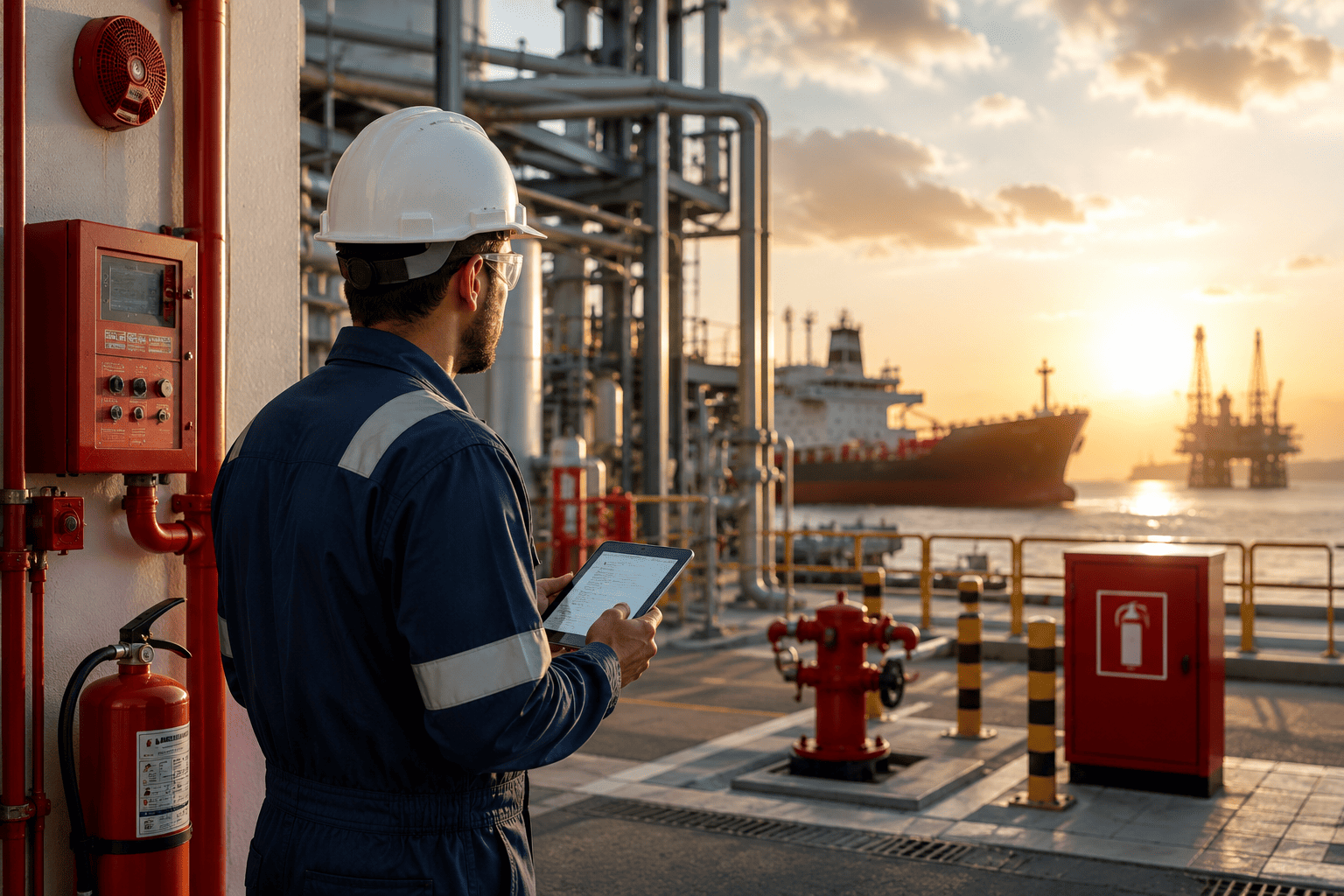
Fire safety is never a one-size-fits-all solution. While the objective is always the same, protecting lives, assets, and business continuity, the challenges faced by an industrial manufacturing facility are vastly different from those aboard a commercial vessel or offshore platform.
Across the UAE, industries such as oil and gas, manufacturing, logistics, marine transport, ports, and shipyards rely on highly specialised fire protection systems that are designed around their unique operating environments. Although both sectors follow internationally recognised fire safety standards, the hazards they encounter, the equipment they require, and the emergency response strategies they implement differ significantly.
Whether you’re managing a factory, warehouse, refinery, marine vessel, or offshore facility, understanding these differences helps you choose the right fire protection strategy while ensuring compliance with industry regulations.
In this guide, we’ll compare industrial fire safety services with marine fire protection, explain why specialised solutions matter, and highlight the professional practices that help businesses across the UAE minimise fire risks.
Why Fire Safety Cannot Be Standardised Across Every Industry
Every workplace has different:
- Fire hazards
- Fuel sources
- Operating conditions
- Occupancy levels
- Emergency response requirements
- Regulatory obligations
A warehouse storing electrical equipment faces different risks than a cargo vessel carrying fuel, chemicals, or hazardous goods.
This is why experienced professionals begin every project with a detailed risk assessment rather than applying the same fire protection solution everywhere.
A trusted fire & safety company in the UAE understands that effective protection starts with understanding the environment itself.
Understanding Industrial Fire Safety
Industrial facilities often operate with large electrical systems, heavy machinery, combustible materials, fuel storage, manufacturing processes, and high-energy equipment.
Industries commonly requiring specialised protection include:
- Manufacturing plants
- Oil and gas facilities
- Chemical processing plants
- Warehouses
- Logistics hubs
- Food production facilities
- Power generation sites
- Engineering workshops
These environments require fire safety systems capable of detecting hazards early while supporting rapid suppression and safe evacuation.
Common Industrial Fire Risks
Industrial properties encounter a wide range of fire hazards.
Some of the most common include:
Electrical Equipment Failures
High-voltage systems, overloaded circuits, ageing cables, and electrical panels can all become ignition sources.
Combustible Dust
Manufacturing processes involving wood, grain, textiles, or metal particles may generate combustible dust capable of causing explosions under certain conditions.
Flammable Liquids and Chemicals
Many industrial operations involve fuels, solvents, oils, gases, and chemicals that require specialised fire suppression systems.
Mechanical Equipment
Motors, conveyors, generators, and production machinery generate heat during operation, increasing fire risk if not properly maintained.
Welding and Hot Work
Maintenance activities involving cutting, welding, or grinding require additional fire prevention measures because they introduce ignition sources into active workplaces.
Understanding Marine Fire Safety
Marine environments introduce an entirely different set of challenges.
Unlike industrial buildings, ships and offshore facilities operate within confined spaces where emergency evacuation options are often limited.
This is why a professional marine fire and safety company in the UAE focuses on specialised systems designed specifically for maritime operations.
Marine facilities include:
- Commercial vessels
- Offshore platforms
- Cargo ships
- Passenger vessels
- Shipyards
- Ports
- Marine terminals
Each environment requires equipment capable of operating reliably despite vibration, saltwater exposure, humidity, and changing weather conditions.
Common Marine Fire Risks
Marine operations face unique hazards rarely found in conventional industrial facilities.
Engine Room Fires
High operating temperatures combined with fuel systems make engine rooms one of the highest-risk areas onboard.
Fuel Handling Operations
Marine vessels often carry significant quantities of diesel, fuel oil, lubricants, or hazardous cargo.
Leaks or equipment failures increase ignition risks.
Electrical Systems
Modern vessels rely heavily on electrical equipment for navigation, communication, propulsion, and onboard operations.
Electrical faults require specialised protection strategies.
Confined Spaces
Unlike industrial buildings, ships have limited escape routes.
Smoke management and rapid detection become especially important.
Saltwater Corrosion
Marine equipment continuously faces harsh environmental conditions that can gradually affect fire protection components if regular inspections are not carried out.
Same Standards, Different Applications
Both industrial and marine sectors often follow internationally recognised fire safety standards.
However, how those standards are applied differs considerably.
Industrial systems focus on:
- Large facility protection
- Production continuity
- Machinery safety
- Process hazards
- Building evacuation
Marine systems focus on:
- Vessel safety
- Crew protection
- Confined space management
- Navigation continuity
- Offshore emergency response
The principles remain consistent, but the implementation changes according to operational risks.
Fire Detection Requirements
Early detection is critical in both environments.
Industrial Facilities
Detection systems may include:
- Smoke detectors
- Heat detectors
- Flame detectors
- Gas detection systems
- Addressable fire alarm systems
These systems monitor large production areas continuously.
Marine Applications
Marine detection systems must withstand:
- Constant vibration
- Salt-laden air
- High humidity
- Temperature fluctuations
Equipment is specifically selected for demanding maritime environments.
Fire Suppression Systems
Choosing the correct suppression system depends entirely on the hazards involved.
Industrial applications may use:
- Water sprinkler systems
- Foam suppression
- Clean agent systems
- Dry chemical systems
- Deluge systems
Marine installations often require:
- Fixed CO₂ systems
- Water mist suppression
- Foam protection
- Engine room suppression systems
- Portable marine-approved extinguishers
Professional system design ensures compatibility with the operating environment.
Inspection and Maintenance Requirements
Installing fire protection equipment is only the beginning.
Ongoing inspection ensures systems continue performing when needed most.
Professional maintenance programmes typically include:
- Fire alarm testing
- Detector calibration
- Extinguisher servicing
- Pump testing
- Suppression system inspections
- Emergency lighting verification
- Hose reel inspections
- Fire door assessments
For marine applications, inspections also evaluate environmental effects such as corrosion and mechanical vibration.
How Professionals Develop Industry-Specific Fire Safety Solutions
An experienced fire & safety company in the UAE does much more than install equipment. Effective fire protection begins with understanding the specific hazards associated with each site and designing solutions that align with operational requirements, regulatory obligations, and emergency response procedures.
Comprehensive Fire Risk Assessment
Every project starts with a detailed evaluation of the facility or vessel.
Professionals assess:
- Operational processes
- Fire load
- Electrical infrastructure
- Fuel storage
- Hazardous materials
- Occupancy levels
- Emergency access
- Existing fire protection systems
This assessment forms the foundation for an effective fire safety strategy.
Custom Fire Protection System Design
Rather than using standard layouts, specialists design systems that match the property’s unique risks.
This may include:
- Fire detection layouts
- Alarm zoning
- Suppression system selection
- Escape route planning
- Emergency shutdown integration
- Equipment positioning
Tailored system design improves both safety and operational efficiency.
Installation to Industry Standards
Proper installation is just as important as selecting the right equipment.
Professional teams ensure:
- Correct system configuration
- Reliable equipment integration
- Compliance with relevant standards
- Functional testing before commissioning
This reduces future operational issues while supporting regulatory compliance.
Routine Inspection and Preventive Maintenance
Fire protection systems require regular servicing to remain dependable.
Professional maintenance programmes include:
- Scheduled inspections
- Functional testing
- Component replacement when required
- Calibration of detection devices
- Performance verification
- Documentation of maintenance activities
Preventive servicing helps identify developing issues before they affect system performance.
Emergency Preparedness and Staff Training
Fire protection extends beyond equipment.
Professionals often support businesses through:
- Emergency response planning
- Fire evacuation procedures
- Fire safety awareness sessions
- Equipment familiarisation
- Operational guidance for responsible personnel
Prepared teams respond more effectively during emergencies.
Choosing the Right Fire Safety Partner
Whether protecting a manufacturing facility or a commercial vessel, selecting an experienced service provider is essential.
Look for a partner that offers:
- Industry-specific expertise
- Certified technicians
- Regulatory knowledge
- Comprehensive inspections
- Preventive maintenance programmes
- Technical support
- End-to-end fire protection solutions
The right partner helps organisations reduce operational risks while protecting people, assets, and business continuity.
Fire Safety Is an Ongoing Commitment
Fire risks evolve as facilities expand, equipment changes, and operational demands increase.
Regular reviews of fire protection systems help ensure continued effectiveness while adapting to changing workplace conditions.
A proactive fire safety programme protects far more than buildings—it safeguards employees, operations, investments, and organisational reputation.
Conclusion
Although industrial facilities and marine operations share the same objective of preventing and controlling fire emergencies, the risks they face are fundamentally different. Industrial environments require protection against machinery, electrical systems, hazardous processes, and combustible materials, while marine operations demand specialised solutions capable of performing reliably in confined spaces and harsh offshore conditions. Choosing the right fire protection strategy means understanding these differences and implementing systems specifically designed for the environment they serve.
At V-Tech Group, we deliver comprehensive industrial fire safety services and marine fire protection solutions tailored to the unique needs of businesses across the UAE. As a trusted fire & safety company in the UAE and an experienced marine fire and safety company in the UAE, our team provides detailed risk assessments, customised system design, professional installation, routine inspections, preventive maintenance, compliance support, and emergency preparedness services. Visit our service page today to discover how our fire safety experts can help protect your facility, vessel, workforce, and operations with reliable, industry-specific solutions.

