

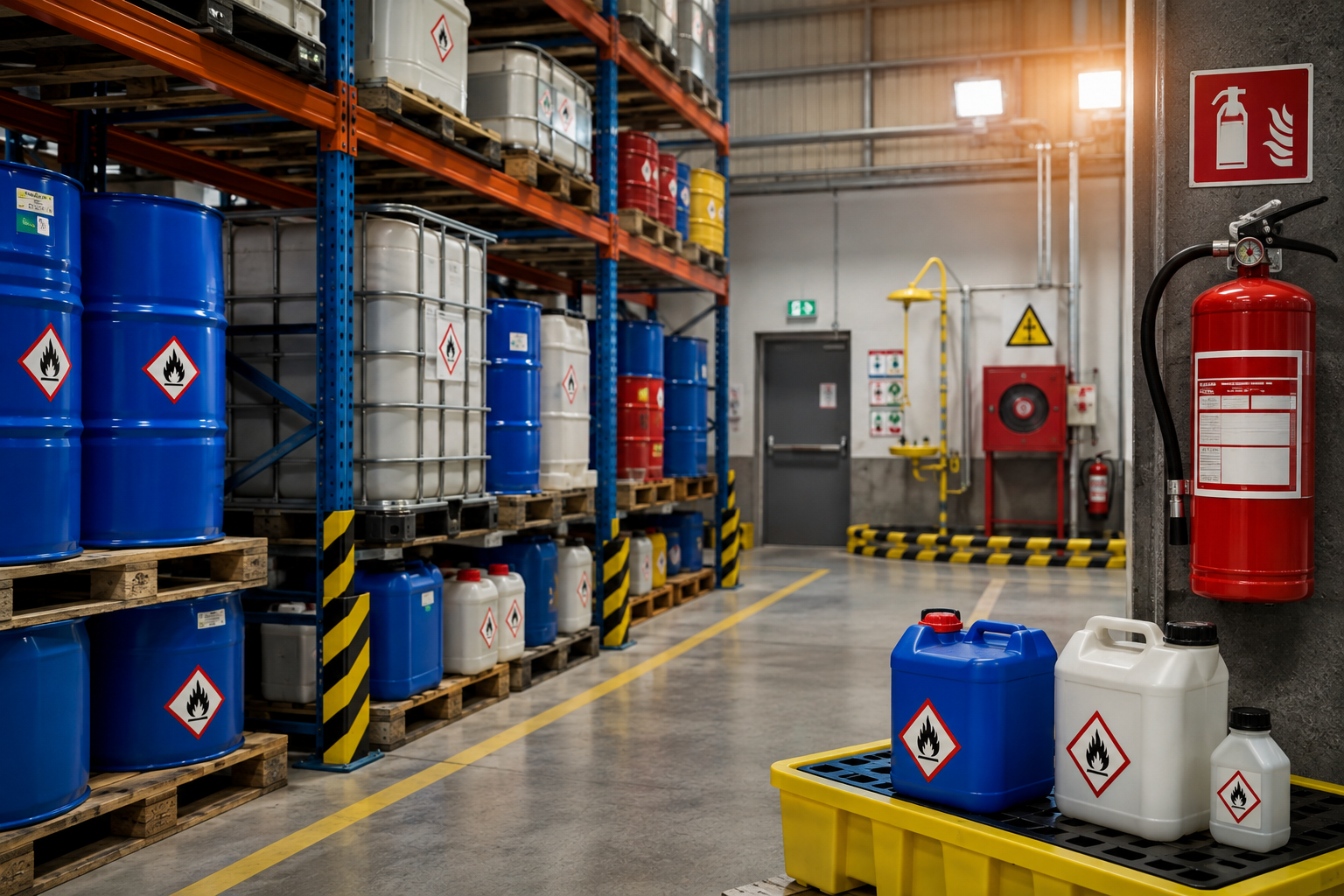
Chemical storage and warehousing require a much more controlled approach to fire safety than conventional storage facilities. Flammable liquids, combustible materials, reactive chemicals, pressurized containers, and incompatible substances can turn a small incident into a serious fire or hazardous event within minutes.
The risk is not limited to the chemicals themselves. Poor ventilation, incorrect storage arrangements, damaged containers, ignition sources, inadequate fire detection, and unsuitable firefighting equipment can all increase the likelihood and severity of an incident.
For warehouses and industrial facilities handling chemicals, fire safety should therefore be treated as an integrated system rather than a single piece of equipment. Proper storage practices, detection, emergency planning, ventilation, fire protection, and regular inspections must work together.
This guide explains the key considerations businesses should address when developing a safer chemical storage and warehousing environment.
Why Chemical Warehouses Require Special Fire Protection
A conventional warehouse may primarily deal with risks such as packaging, electrical equipment, or combustible stock. Chemical facilities can involve several additional hazards at the same time.
Flammable Materials
Certain chemicals can ignite easily when exposed to heat, sparks, flames, or other ignition sources.
Toxic or Hazardous Substances
A fire may release harmful gases or vapours, creating risks beyond the flames themselves.
Chemical Reactions
Some substances can react dangerously when exposed to incompatible chemicals, water, heat, or other materials.
Rapid Fire Development
Chemical fires can spread quickly depending on the quantity, storage arrangement, and physical properties of the substances involved.
Because of these risks, fire protection needs to be designed around the specific materials stored rather than relying on a generic warehouse approach.
Start With a Chemical-Specific Risk Assessment
The first step is understanding exactly what is being stored.
A proper assessment should consider the properties and quantities of the chemicals, the storage configuration, building layout, environmental conditions, and potential ignition sources.
Identify the Chemical Hazards
Review whether materials are:
- Flammable
- Oxidizing
- Toxic
- Corrosive
- Reactive
- Combustible
- Pressurized
Safety Data Sheets (SDS) should be readily available and used to understand storage, handling, and emergency requirements.
Determine Storage Quantities
The quantity stored can significantly influence the potential consequences of a fire.
Large volumes of flammable or reactive materials require greater separation, containment, detection, and firefighting considerations than small quantities.
Identify Ignition Sources
Common ignition sources may include:
- Electrical equipment
- Welding and hot work
- Vehicles
- Static electricity
- Heating equipment
- Open flames
- Faulty machinery
Removing or controlling unnecessary ignition sources is one of the simplest ways to reduce fire risk.
Store Chemicals According to Compatibility
One of the most important aspects of chemical warehouse safety is preventing incompatible substances from being stored together.
A chemical storage area should never be organized simply according to available shelf space.
Separate Incompatible Chemicals
Certain substances can react violently when they come into contact with one another.
For example, oxidizing materials may need to be separated from flammable substances, while reactive chemicals may require specific storage conditions.
Use Appropriate Containers
Containers should be compatible with their contents and suitable for the expected environmental conditions.
Regular inspections should identify:
- Cracks
- Corrosion
- Leaks
- Damaged caps
- Swollen containers
- Deteriorated labels
A damaged container can create both a chemical exposure and fire hazard.
Control the Warehouse Environment
The surrounding environment can influence how quickly a chemical incident develops.
Maintain Suitable Ventilation
Some chemicals can release vapours that may accumulate in enclosed spaces.
Appropriate ventilation helps control airborne contaminants and reduce the accumulation of potentially hazardous vapours.
However, ventilation systems must be designed according to the specific hazards present. Poorly designed airflow can sometimes spread vapours rather than safely remove them.
Control Temperature
Certain chemicals require controlled temperature conditions.
Excessive heat can increase evaporation, pressure, degradation, or the risk of ignition.
Temperature monitoring may therefore be necessary in areas where stored chemicals are sensitive to heat.
Install Appropriate Fire Detection
Early detection can make a major difference in limiting fire damage.
A chemical warehouse should have detection systems appropriate to the risks and environmental conditions.
Smoke Detection
Smoke detectors can provide early warning for many types of fires.
Heat Detection
Heat detectors may be more suitable in areas where dust, vapours, or environmental conditions could cause unwanted smoke detector activation.
Flame Detection
In certain high-risk environments, flame detection can provide rapid identification of visible flames.
The correct technology should be selected based on the warehouse environment and the materials being stored.
Choose Fire Suppression Carefully
There is no universal firefighting agent that is appropriate for every chemical fire.
The correct suppression strategy depends on the properties of the stored materials.
Water-Based Systems
Water can be highly effective for many ordinary combustibles, but it may not be appropriate for every chemical.
Certain reactive substances can create additional hazards when exposed to water.
Foam Systems
Foam may be suitable for specific flammable liquid applications because it can help suppress vapours and separate fuel from ignition sources.
Dry Chemical Systems
Dry chemical agents can be useful for certain flammable liquid and gas fires, depending on the application.
Specialized Suppression
Some chemical storage environments may require specialized suppression solutions based on the hazards identified during the design stage.
The important point is that suppression equipment should be selected after understanding the chemical risks—not simply based on what is commonly installed in warehouses.
Maintain Clear Firefighting Access
Fire protection equipment is only useful when emergency personnel can reach the affected area.
Storage layouts should maintain suitable access routes for:
- Firefighting equipment
- Emergency responders
- Evacuation
- Inspection and maintenance
Do not allow chemical containers, pallets, packaging, or other materials to obstruct fire exits, hydrants, extinguishers, alarm equipment, or emergency access routes.
Manage Electrical and Ignition Hazards
Electrical equipment can become a significant ignition source in chemical storage areas.
Depending on the chemicals and vapours present, specialized electrical equipment may be required.
Inspect Electrical Installations
Regularly check:
- Cables
- Switches
- Motors
- Distribution equipment
- Connections
- Lighting fixtures
Damaged electrical equipment should be repaired promptly.
Control Hot Work
Welding, cutting, grinding, and similar activities should only be carried out under controlled conditions.
A suitable hot-work procedure should include authorization, removal or protection of combustible materials, appropriate fire extinguishing equipment, and post-work monitoring.
Prevent Chemical Spills from Becoming Fire Emergencies
A spill can rapidly increase the risk in a chemical warehouse.
Liquid chemicals may spread across floors and reach ignition sources or drains.
Use Suitable Spill Containment
Depending on the material, facilities may require:
- Bunded storage
- Secondary containment
- Spill trays
- Containment areas
Keep Spill Response Equipment Available
Employees should know where suitable spill response materials are located and how they should be used.
The response method must be appropriate for the specific chemical. Some substances should not be cleaned up using ordinary absorbent materials or water.
Train Employees for Chemical Fire Emergencies
Fire protection equipment cannot replace properly trained personnel.
Employees should understand the hazards associated with the materials they handle and know what to do during an emergency.
Training Should Cover
- Fire alarm procedures
- Evacuation routes
- Emergency communication
- Chemical handling
- Spill response
- Fire extinguisher awareness
- Reporting unsafe conditions
- Emergency assembly procedures
Workers should also understand when not to attempt firefighting and when immediate evacuation is the safest response.
Keep Emergency Plans Practical
A written emergency plan should reflect the actual warehouse rather than being a generic document.
It should identify:
Emergency Exits
Routes should remain clearly marked and unobstructed.
Assembly Areas
Employees should know where to gather after evacuation.
Emergency Contacts
Relevant emergency and facility contacts should be easily accessible.
Chemical Information
Emergency responders should be able to access information about the chemicals stored on-site.
Regular drills can help identify weaknesses in evacuation procedures and employee response.
Inspect and Maintain Fire Protection Systems
Installing fire safety equipment is only the beginning.
Systems need regular inspection, testing, maintenance, and documentation.
Fire Detection
Check detectors, alarms, control panels, and associated components.
Suppression Systems
Inspect system components, valves, pressure conditions, and other relevant equipment according to the system design and applicable requirements.
Portable Extinguishers
Ensure extinguishers are accessible, correctly positioned, and suitable for the potential fire classes present.
Emergency Lighting
Confirm that emergency lighting and exit signs function correctly.
Maintenance records should be kept so facility managers can identify recurring problems and demonstrate that safety systems are being maintained.
Common Fire Safety Mistakes in Chemical Warehouses
Some of the most preventable risks come from everyday practices.
Mixing Incompatible Materials
Using storage space without considering chemical compatibility can create dangerous reactions.
Blocking Fire Equipment
Pallets and containers should never obstruct extinguishers, exits, alarms, or emergency routes.
Ignoring Small Leaks
A minor leak can become a major hazard if it continues unnoticed.
Using Incorrect Fire Extinguishing Methods
The wrong firefighting agent can make certain chemical incidents worse.
Neglecting Maintenance
A fire alarm or suppression system that has not been properly maintained may fail when it is needed most.
Treating Training as Optional
Employees need practical knowledge of both routine handling and emergency procedures.
Building a Layered Fire Safety Strategy
Chemical warehouse protection works best when several safety measures support each other.
A strong approach combines:
- Hazard identification
- Compatible chemical storage
- Ventilation
- Ignition-source control
- Fire detection
- Suitable suppression
- Spill containment
- Emergency planning
- Employee training
- Routine inspections
- Preventive maintenance
If one layer fails, the others should help reduce the consequences.
This layered approach is especially important for facilities where chemical quantities, storage conditions, or operational activities change over time.
Conclusion
Fire safety in chemical storage and warehousing requires careful planning and a professional fire and safety company support, because the hazards can vary significantly from one facility to another. The right approach begins with understanding the chemicals being stored and then building protection measures around their specific characteristics. Safe segregation, suitable ventilation, reliable detection, appropriate suppression, spill control, employee training, and regular system maintenance all contribute to a safer working environment.
Rather than treating fire protection as a one-time installation, businesses should view it as an ongoing process that evolves with their operations. Regular risk reviews and maintenance can help identify weaknesses before they become serious safety concerns.
V-Tech Group supports industrial businesses with engineering and automation solutions tailored to demanding operational environments. By combining technical expertise with practical system design and support, the company helps clients strengthen the reliability, control, and safety of critical industrial operations.

