

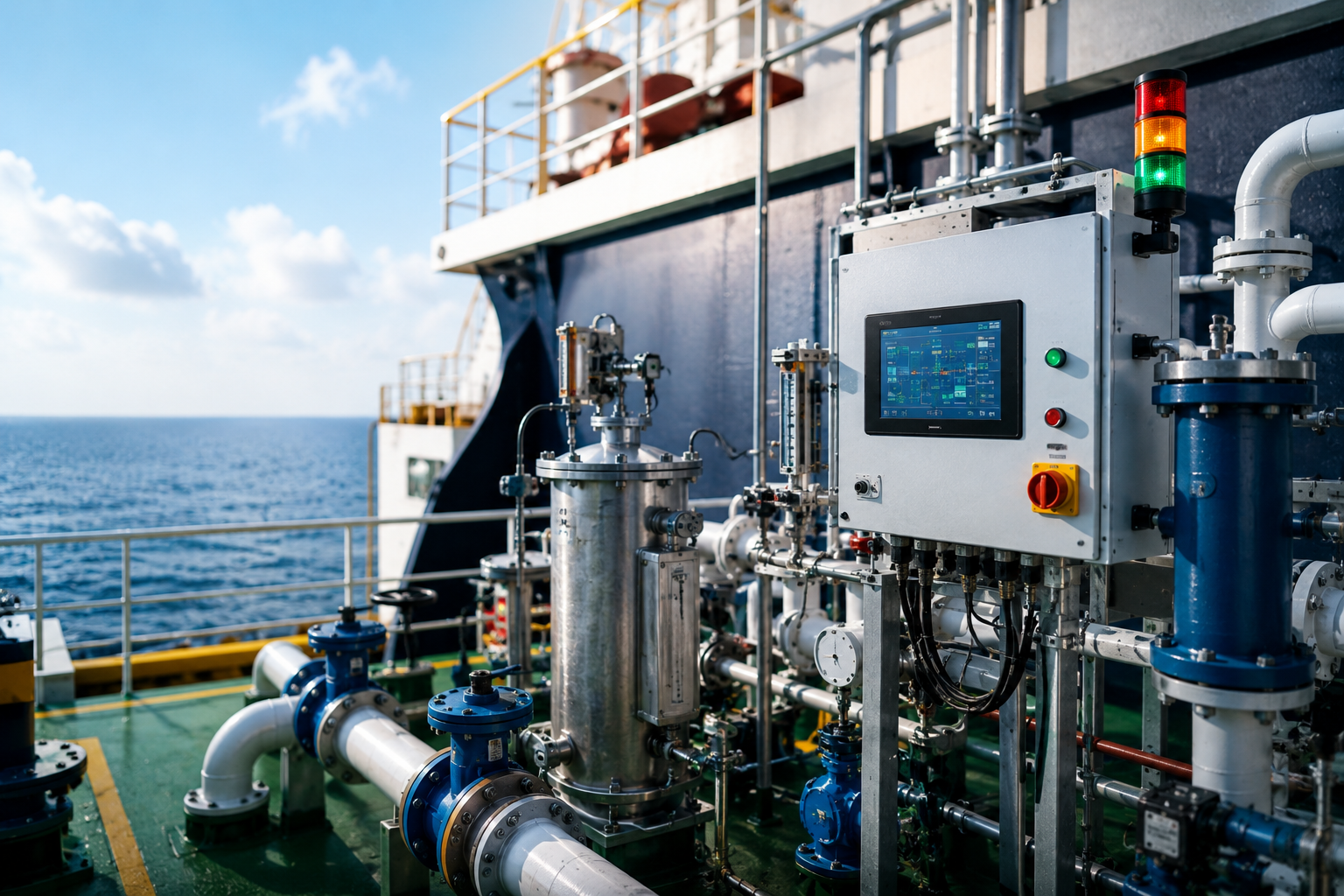
Ballast water is essential for safe ship operation, but managing it correctly is also an important environmental and compliance responsibility. Ships take in ballast water to maintain stability, trim, and safe operating conditions, then discharge it at another location. Without proper treatment, this water can carry aquatic organisms and pathogens from one ecosystem to another.
This is where a Ballast Water Treatment System (BWTS) becomes critical. However, installing treatment equipment alone is not enough. The system needs reliable automation and control to monitor operating conditions, manage treatment processes, detect faults, and maintain accurate operational records.
Under the IMO Ballast Water Management Convention, ballast water management systems used for compliance must be approved by the relevant Administration in accordance with the mandatory BWMS Code. Commissioning testing is also mandatory, making reliable control and monitoring an important part of the overall system.
For shipowners and operators, the goal is therefore not simply to have a treatment system onboard. The real objective is to ensure that the system operates correctly, consistently, and transparently during actual vessel operations.
Why Automation Matters in Ballast Water Treatment
A ballast water treatment system may involve several interconnected components, including pumps, filters, valves, sensors, treatment units, control panels, alarms, and monitoring devices.
Operating these components manually would be inefficient and increase the possibility of human error.
Automation creates a coordinated control environment where the system can monitor conditions and respond according to predefined operating requirements.
Automated Monitoring
Sensors can continuously monitor parameters such as:
- Flow rate
- Pressure
- Tank levels
- Temperature
- Treatment status
- Valve positions
- Filter condition
- Treatment-related parameters
The control system uses this information to determine whether the treatment process is operating within its expected conditions.
Automated Equipment Control
Automation can coordinate pumps, valves, filters, treatment equipment, and other components according to the selected operating sequence.
This helps ensure that ballast water follows the correct treatment path rather than relying entirely on manual intervention.
Understanding the Compliance Side
The IMO Ballast Water Management Convention establishes requirements intended to prevent the transfer of harmful aquatic organisms and pathogens through ships’ ballast water. The Convention includes the D-2 ballast water performance standard, while the BWMS Code establishes requirements for approval of treatment systems.
For ship operators, compliance therefore involves more than purchasing approved equipment.
The system must be:
- Properly installed
- Correctly commissioned
- Operated according to its approved configuration
- Maintained appropriately
- Monitored during operation
- Supported by required documentation and records
IMO also notes that port State control inspections may involve checking the ship’s certificate and approved ballast water management plan, reviewing the ballast water record book, and sampling ballast water.
This makes reliable automation and data management particularly important.
What a Ballast Water Automation System Controls
The exact architecture varies according to the vessel and treatment technology, but a typical automated arrangement may control several stages of the ballast process.
Ballast Water Intake
During ballast operations, the automation system can monitor the intake process and coordinate associated pumps and valves.
Typical Monitoring
The system may monitor:
- Pump operation
- Flow conditions
- Valve status
- Pressure
- Tank levels
If an abnormal condition occurs, the control system can generate an alarm or initiate a predefined response.
Filtration and Treatment
Many ballast water treatment technologies use filtration followed by another treatment process. Treatment technologies can include systems based on filtration and ultraviolet light or electrochlorination, among others.
Automation helps coordinate these stages so that the treatment process operates within its designed conditions.
Why This Matters
Treatment performance can be affected when equipment operates outside its intended parameters. Monitoring flow, pressure, treatment status, and other relevant conditions helps operators identify problems before they become larger operational issues.
Ballast Water Discharge
The discharge stage also requires controlled operation.
The automation system can help confirm that:
- The appropriate valves are open
- Pumps are operating correctly
- Treatment equipment is functioning
- Relevant operating conditions are within limits
- Alarms are clear before the operation proceeds
This creates a controlled sequence rather than leaving critical decisions entirely to manual operation.
Alarm and Fault Management
A reliable alarm system is one of the most important parts of BWTS automation.
Operators need to know when something is not working as expected.
Common Alarm Conditions
Depending on the system, alarms may relate to:
- Low or high pressure
- Abnormal flow
- Filter differential pressure
- Pump faults
- Valve failures
- Treatment unit faults
- Sensor failures
- Communication problems
- Power interruptions
The purpose of an alarm is not simply to alert the operator. It should provide useful information that helps identify what has happened and what action may be required.
Poorly configured alarms can create unnecessary alerts, while insufficient alarms may allow important faults to go unnoticed.
Sensors Are Central to System Reliability
Automation is only as reliable as the information it receives.
Sensors provide the data required by the control system to make decisions. A faulty or poorly calibrated sensor can therefore create incorrect readings and potentially affect the treatment sequence.
Important Sensor Considerations
Sensors should be:
- Suitable for the marine environment
- Correctly installed
- Properly calibrated
- Protected against environmental conditions
- Regularly inspected
- Compatible with the control system
Sensor faults should also be distinguished from genuine process abnormalities. Simply replacing components without identifying the root cause can lead to repeated failures.
PLC and Control Panel Integration
The programmable logic controller (PLC) is often at the heart of an automated ballast water treatment system.
It receives signals from field devices and executes programmed control logic.
Typical PLC Functions
A PLC may manage:
- Pump sequencing
- Valve operation
- Treatment activation
- Interlocks
- Alarm conditions
- Shutdown sequences
- Operating modes
- Communication with monitoring systems
The control panel provides operators with a practical interface for monitoring the system and responding to operating conditions.
A well-designed interface should make important information easy to understand rather than overwhelming operators with unnecessary data.
Interlocks Improve Operational Safety
Interlocks prevent certain actions from occurring unless predefined conditions are satisfied.
For example, the system may prevent a particular operation from starting if a required valve is not in the correct position or if a critical component has reported a fault.
Why Interlocks Matter
They can help:
- Prevent incorrect operating sequences
- Protect equipment
- Reduce operator error
- Improve process consistency
- Support safer operation
Interlocks should be carefully designed around the actual process rather than added without considering how the vessel operates.
Data Logging and Operational Records
Modern automation systems can capture valuable operational information.
Depending on the system design, this may include:
- Operating hours
- Treatment cycles
- Alarm history
- Flow information
- Equipment status
- Fault events
- Sensor readings
This information can help operators investigate faults, demonstrate operational history, and support maintenance planning.
The IMO has also provided guidance concerning ballast water record-keeping and reporting, including electronic record books.
Accurate data, therefore, has practical value beyond day-to-day system monitoring.
Common Automation Problems in BWTS
Even a properly designed treatment system can experience operational problems if its automation is not maintained correctly.
Sensor Failure
Incorrect sensor readings can affect control decisions and trigger unnecessary alarms.
Communication Loss
Problems between PLCs, HMIs, sensors, and other components can interrupt monitoring or control.
Valve or Actuator Problems
A control command is ineffective if the physical valve does not respond correctly.
Software or Logic Issues
Incorrect control logic can cause unexpected sequences or prevent normal operation.
Poor Maintenance
Neglected filters, pumps, sensors, and control components can gradually reduce system reliability.
For this reason, troubleshooting should examine the complete control chain rather than focusing on a single component.
A Practical Maintenance Approach
Preventive maintenance is essential for keeping the BWTS automation dependable.
Inspect Field Devices
Check sensors, actuators, cables, connectors, and junction boxes for signs of damage or deterioration.
Test Alarms
Alarm functions should be tested periodically to confirm that operators receive appropriate warnings.
Verify Sensors
Calibration and performance checks help identify measurement drift.
Review Historical Data
Repeated alarms or unusual readings may reveal developing problems before a major failure occurs.
Check Control Logic
Any modifications should be properly documented, tested, and managed to prevent unintended changes to the system.
Designing Automation Around the Vessel
A ballast water treatment system should not be treated as an isolated piece of equipment. Its automation needs to work with the vessel’s existing electrical, control, monitoring, and operational infrastructure.
Before implementation, engineers should consider:
Vessel Requirements
Available power, space, piping configuration, and existing control architecture can influence system integration.
Treatment Technology
Different treatment technologies require different monitoring and control strategies.
Operating Conditions
Freshwater, seawater, temperature variations, and challenging water quality conditions can affect system operation.
Crew Interaction
The interface should provide clear information and practical controls for the crew operating the system.
A well-integrated system reduces unnecessary manual intervention while giving operators sufficient visibility and control.
From Compliance Equipment to a Controlled Marine System
Ballast water treatment is ultimately about more than meeting a regulatory requirement. A system that is difficult to operate, frequently generates alarms, or provides unreliable information can create unnecessary workload and operational uncertainty.
Automation brings the different parts of the treatment process together. It provides the monitoring, sequencing, alarms, interlocks, and data required to make the system easier to operate and maintain.
For shipowners, this means the focus should extend beyond selecting treatment equipment. The automation architecture, instrumentation, integration, commissioning, and ongoing support deserve equal attention.
Conclusion
Effective ballast water management depends on the interaction between treatment technology, automation, instrumentation, and disciplined operation. A reliable control system can help coordinate treatment processes, monitor critical parameters, manage alarms, protect equipment, and provide useful operational data.
As regulatory requirements and vessel technologies continue to evolve, automation will remain an important part of keeping ballast water treatment systems dependable and manageable onboard. The best results come from treating compliance, control, and maintenance as connected responsibilities rather than separate tasks.
V-Tech Group provides marine automation and control solutions designed to support demanding vessel operations. By combining automation expertise, instrumentation, control integration, and engineering support, the company helps shipowners and operators build dependable systems that improve operational control while supporting the performance and reliability of critical marine equipment.

