

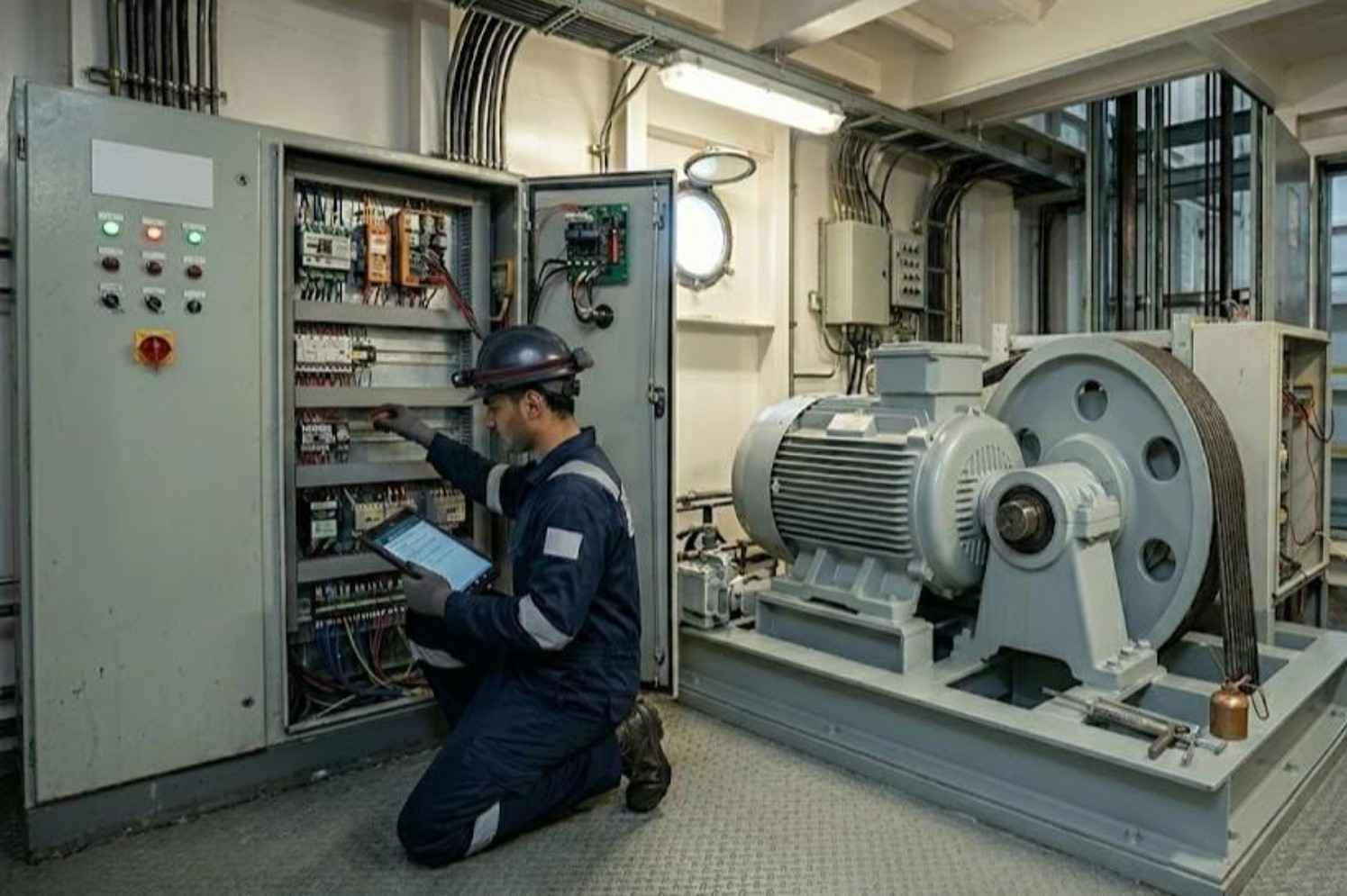
Marine elevators play a crucial role on passenger vessels, offshore platforms, and cargo ships. They are responsible for transporting crew members, passengers, equipment, and supplies between decks. Because these systems operate in harsh marine environments—exposed to vibration, humidity, and salt corrosion regular inspections are essential for safe operations.
For ship operators in the UAE, maintaining elevators is not just about functionality but also about safety and regulatory compliance. Many operators ask how to approach marine elevator maintenance and what an annual inspection should include.
This guide provides a practical marine elevator maintenance checklist, explaining the key components that should be inspected during yearly maintenance to ensure safety, reliability, and compliance with maritime standards.
Why Marine Elevator Maintenance Is Important
Marine elevators are designed to operate under challenging conditions such as ship movement, vibration, and environmental exposure. Over time, these factors can affect mechanical parts, electrical systems, and safety devices.
Regular marine elevator maintenance helps ship operators:
- Prevent equipment failures during operations
- Ensure compliance with maritime safety standards
- Extend the lifespan of elevator components
- Improve passenger and crew safety
- Reduce costly downtime and repairs
International standards such as ISO 8383 require periodic inspections of elevators installed on ships, typically performed annually by qualified technicians.
Annual Marine Elevator Maintenance Checklist
A structured inspection helps marine engineers evaluate the condition of elevator systems and identify potential issues early. The following checklist highlights the most important inspection areas.
1. Elevator Car and Platform Inspection
The elevator car or platform is one of the most visible components of the system. It must be carefully inspected for structural integrity and safe operation.
Key inspection points include:
- Checking for cracks, corrosion, or damage on the elevator platform
- Inspecting weld joints and structural components
- Verifying that flooring, panels, and lighting are secure
- Ensuring handrails and safety signage are properly installed
- Confirming that weight capacity labels are clearly visible
Damage to the elevator platform can affect safety and must be addressed immediately during marine elevator maintenance inspections.
2. Mechanical Components and Moving Parts
Marine elevators rely on mechanical systems such as motors, pulleys, gears, and cables to move between decks. These components must be carefully checked to ensure smooth and safe operation.
During maintenance, technicians typically inspect:
- Drive motors and gear mechanisms
- Pulleys, wire ropes, and lifting cables
- Bearings and roller assemblies
- Brake systems and safety locks
- Lubrication of moving parts
Technicians also check for unusual vibrations, noise, or overheating, which may indicate mechanical issues.
3. Electrical Systems and Control Panels
Electrical components are critical to elevator functionality. Faulty wiring or malfunctioning control systems can lead to operational disruptions or safety risks.
The electrical inspection should include:
- Checking control panels and circuit boards
- Inspecting wiring for damage or corrosion
- Testing elevator control systems
- Verifying operation of indicator lights and displays
- Inspecting emergency power supply connections
Electrical systems must function correctly to ensure that the elevator responds accurately to commands from passengers and crew.
4. Door Operation and Safety Interlocks
Elevator doors are an essential safety component. Malfunctioning doors can cause operational delays or accidents.
During marine elevator maintenance, technicians examine:
- Door opening and closing mechanisms
- Door interlocks and locking systems
- Sensors and obstruction detection devices
- Door alignment and track systems
Door safety systems must be tested to ensure that the elevator cannot operate if the doors are not properly closed.
5. Emergency Systems and Safety Devices
Emergency safety systems protect passengers and crew during power failures or mechanical malfunctions.
Inspection of safety features should include:
- Testing emergency stop buttons
- Verifying alarm systems and communication devices
- Inspecting emergency rescue equipment
- Checking safety brakes and overspeed governors
- Confirming backup lighting inside the elevator car
Routine testing of these systems is a critical part of marine elevator maintenance, ensuring that passengers can be safely evacuated if necessary.
6. Elevator Shaft and Structural Components
The elevator shaft and surrounding infrastructure must also be inspected during annual maintenance.
Key checks include:
- Inspecting shaft walls and guide rails
- Checking shaft lighting and ventilation
- Removing debris or obstructions
- Ensuring guide rails are properly aligned
- Inspecting pit areas for water accumulation or corrosion
Proper shaft maintenance ensures that the elevator travels smoothly between decks without obstruction.
7. Hydraulic and Drive System Inspection
Some marine elevators operate using hydraulic systems, while others rely on traction drives. Both require detailed inspection during annual maintenance.
Hydraulic system checks may include:
- Inspecting hydraulic pumps and valves
- Checking hydraulic oil levels and contamination
- Examining hoses and pipes for leaks
- Testing pressure control systems
Proper hydraulic system maintenance ensures stable elevator movement and reliable performance.
8. Load Testing and Performance Evaluation
In addition to routine inspections, elevators must occasionally undergo load testing to confirm they can safely carry their rated capacity.
Best practice typically includes:
- Annual safety inspections by qualified technicians
- Performance testing of elevator movement
- Load testing approximately every five years
These procedures help confirm that the elevator system operates safely under real operating conditions.
9. Documentation and Compliance Records
Maintenance documentation is a critical requirement for maritime inspections and audits.
Operators should maintain records including:
- Inspection reports and maintenance logs
- Service records and repair documentation
- Certificates from inspection authorities
- Compliance with flag state and classification society requirements
Proper documentation ensures that the vessel meets safety and regulatory standards during inspections.
Best Practices for UAE Ship Operators
Ship operators in the UAE operate in busy maritime routes, offshore energy installations, and cruise operations. To maintain safe elevator operations, operators should adopt the following practices:
- Integrate elevators into the ship’s Planned Maintenance System (PMS)
- Schedule annual inspections with certified technicians
- Conduct regular functional checks between inspections
- Train crew members to report unusual noises or malfunctions
These practices help ensure consistent marine elevator maintenance and prevent unexpected failures during operations.
Conclusion
Marine elevators are essential systems on modern vessels, supporting passenger movement, cargo handling, and operational efficiency. However, these systems operate in demanding environments that require regular inspection and maintenance.
Understanding the key components involved in marine elevator maintenance helps ship operators maintain safety, comply with international standards, and ensure smooth vessel operations. From mechanical systems and electrical components to safety devices and load testing, each inspection step plays a vital role in maintaining reliable elevator performance.
For ship operators seeking reliable inspection and maintenance solutions, professional service providers like V-Tech can support annual inspections, technical evaluations, and long-term maintenance strategies to keep marine elevators operating safely and efficiently.
Tags:

